
Recovering hand function after a stroke requires consistent, targeted exercises. The right movements can help rebuild strength, improve flexibility, and retrain the brain to regain control.
In this guide, you’ll learn 10 effective hand therapy exercises that stroke patients can safely practice at home.
After a stroke, the connection between the brain and hand muscles is often disrupted. Without regular movement:
- Muscles become stiff
- Fingers lose coordination
- Recovery slows down
👉 Repetition is key. The more you practice, the more you help your brain rebuild those lost connections.
If you’re just starting your recovery journey, check out our full guide here:
👉 [Stroke Hand Recovery: Complete Guide]
- Finger Bending and Straightening
Gently bend your fingers into a fist and then slowly open your hand.
👉 Helps improve flexibility and basic movement - Thumb Touch Exercise
Touch each fingertip with your thumb one by one.
👉 Improves coordination and fine motor control - Hand Squeezing (Soft Ball)
Use a soft ball or sponge and gently squeeze it.
👉 Builds grip strength - Finger Lifting
Place your hand flat on a table and lift each finger individually.
👉 Strengthens finger independence - Wrist Rotation
Slowly rotate your wrist clockwise and counterclockwise.
👉 Improves joint mobility - Towel Scrunching
Place a towel on a table and use your fingers to scrunch it toward you.
👉 Enhances grip and coordination - Rubber Band Stretch
Place a rubber band around your fingers and gently open your hand against resistance.
👉 Strengthens finger extension - Object Pick-Up Practice
Pick up small objects like coins or blocks.
👉 Improves real-life hand function - Assisted Finger Movement
Use your healthy hand to move your affected fingers.
👉 Helps maintain flexibility in early stages - Guided Robotic Training (Advanced Support)
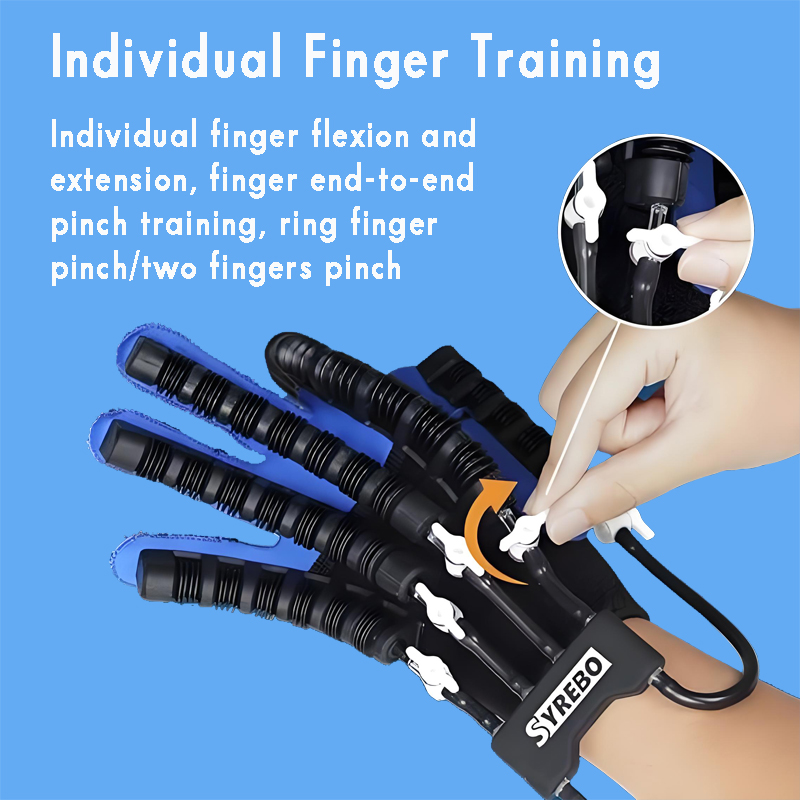
For patients who struggle with consistent movement, assisted devices can help guide the hand through natural motions.
A robotic rehabilitation glove can:
- Move fingers automatically
- Ensure consistent repetition
- Reduce effort during training
👉 You can explore one option here:
👉 [Smart Robotic Recovery Glove]
For best results:
- Practice 15–30 minutes per day
- Stay consistent (daily if possible)
- Focus on slow, controlled movements
👉 Consistency matters more than intensity
✔ Start with simple movements
✔ Don’t force painful motions
✔ Track small improvements
✔ Stay patient — recovery takes time
👉 If manual exercises feel difficult, assisted tools like a hand therapy glove can make daily training easier and more effective.
👉 [View the rehab glove here]
Recovery timelines vary:
- Some notice flexibility improvements within weeks
- Strength and coordination may take longer
- Progress depends on repetition and consistency
Hand therapy exercises are one of the most important parts of stroke recovery.
By combining:
- Daily exercises
- Consistent practice
- Supportive tools
you can significantly improve your chances of regaining hand function.