
Recovering hand function after a stroke requires consistent training—but not everyone has access to daily therapy sessions.
That’s why many patients and caregivers look for effective rehabilitation devices they can use at home.
In this guide, we’ll break down the best devices for stroke hand rehabilitation, how they work, and which ones are actually worth considering.
The best home rehabilitation devices include:
- Robotic therapy gloves
- Hand exercise balls
- Finger stretch bands
- Grip strength trainers
👉 Among these, robotic rehab gloves offer the most consistent and guided training.
For a full recovery strategy, see:
👉 [Stroke Hand Recovery: Complete Guide]
After a stroke, recovery depends heavily on repetition and consistency.
However, many patients face challenges:
- Limited access to therapy
- Difficulty maintaining daily exercises
- Lack of guided movement
👉 Home rehabilitation devices help bridge this gap.
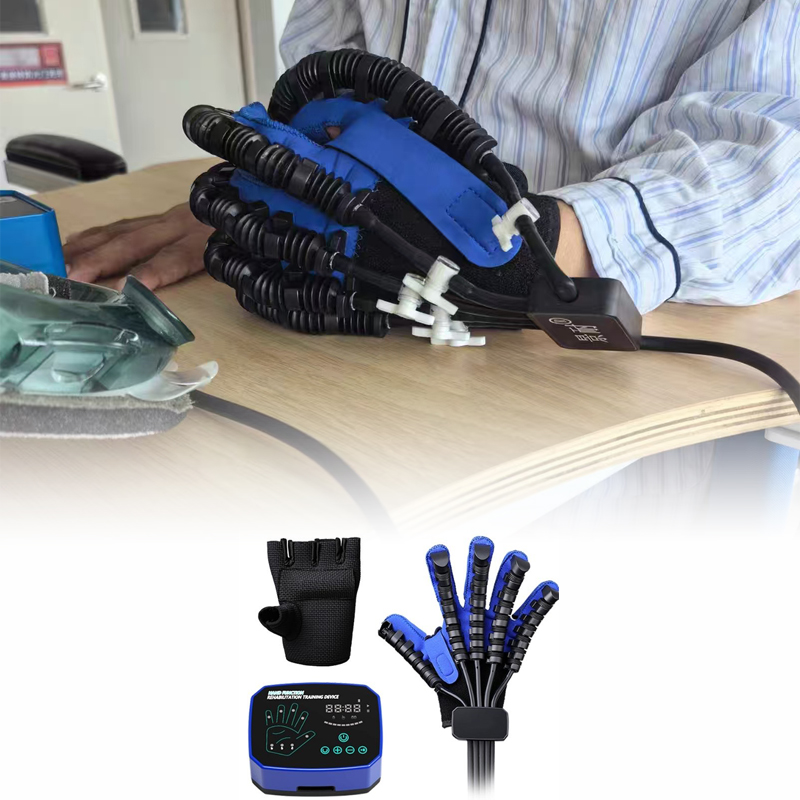
Robotic gloves are one of the most effective tools for hand rehabilitation.
✔ How They Help:
- Assist finger movement automatically
- Provide consistent repetition
- Support brain re-learning (neuroplasticity)
✔ Best For:
- Patients with limited hand movement
- Those who struggle with manual exercises
- Home-based rehabilitation
👉 Example:
👉 [Smart Robotic Recovery Glove]
Soft balls or therapy putty are widely used for basic training.
✔ Benefits:
- Improves grip strength
- Easy to use
- Affordable
❌ Limitations:
- Requires active effort
- Hard to stay consistent
Elastic bands help train finger extension.
✔ Benefits:
- Strengthens finger muscles
- Adds resistance training
❌ Limitations:
- Not suitable for severe cases
- Requires proper technique
Devices designed to improve hand strength.
✔ Benefits:
- Builds muscle strength
- Useful for later recovery stages
❌ Limitations:
- Not ideal for early-stage patients
- Limited movement variety
Some tools help guide movement without requiring full effort.
These include:
- Mechanical assist devices
- Simple hand rehabilitation tools
👉 However, they often lack the precision and consistency of robotic solutions.
The best choice depends on your condition:
- Mild impairment → exercise tools may be enough
- Moderate impairment → combine exercises + devices
- Severe limitation → assisted or robotic devices recommended
👉 For many users, robotic gloves provide the easiest way to maintain consistent daily training.
Compared to traditional tools:
| Feature | Traditional Tools | Robotic Gloves |
|---|---|---|
| Movement assistance | ❌ | ✔ |
| Consistency | ❌ | ✔ |
| Ease of use | ⚠️ | ✔ |
| Daily usability | ⚠️ | ✔ |
👉 This makes them one of the most practical options for home rehabilitation.
Regardless of the device you choose:
✔ Use it daily (15–30 minutes)
✔ Combine with simple exercises
✔ Stay consistent over time
👉 Consistency is the #1 factor in recovery success
There is no single “perfect” device for stroke recovery.
However, the best results usually come from:
- Consistent daily training
- The right combination of tools
- Long-term commitment
👉 If you’re looking for a structured and easy-to-use solution, a robotic hand rehabilitation glovecan provide guided, repeatable training at home.
👉 [View the rehab glove here]