
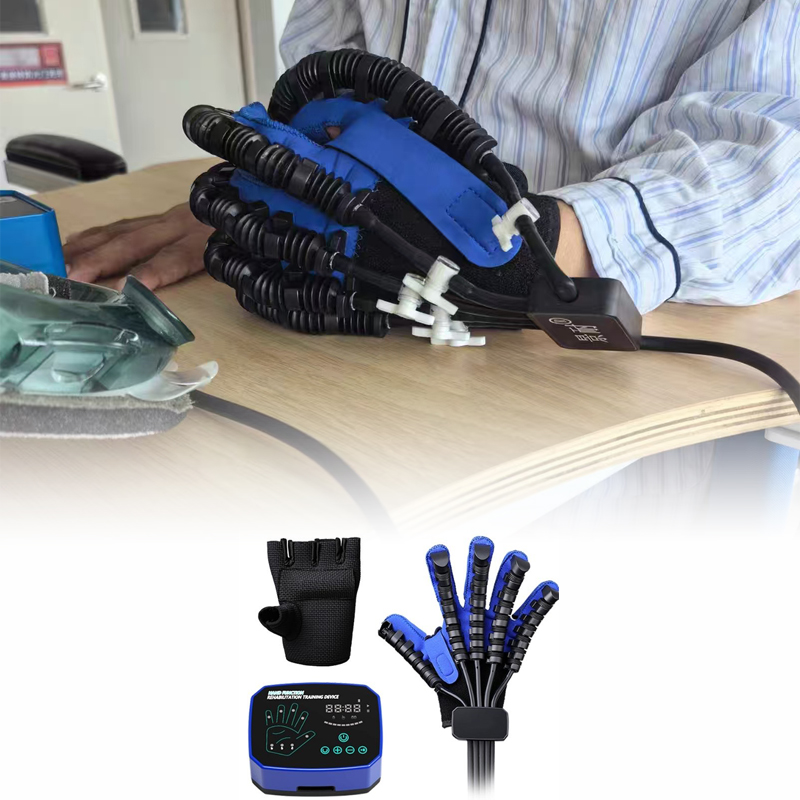
The Smart Robotic Recovery Glove is a 2026 breakthrough in neurorehabilitation, designed to restore hand function through soft robotic technology and mirror therapy. Specifically engineered for stroke survivors and individuals with hemiplegia, this robotic hand trainer triggers neuroplasticity by facilitating repetitive flexion and extension exercises. With a portable 550g host and 9 intensity levels, it is currently the most accessible hand function recovery glove for intensive at-home therapy.
The Science Behind Robotic Hand Rehabilitation
Post-stroke recovery relies heavily on Neuroplasticity—the brain’s remarkable ability to reorganize itself by forming new neural connections. However, this process requires thousands of repetitions that are often impossible to achieve in limited clinical sessions.
This is where the Smart Robotic Recovery Glove steps in. By providing consistent, pneumatic-driven assistance, it allows patients to perform high-frequency training from the comfort of their sofa. Unlike rigid traditional braces, the soft robotic structure ensures safety while providing enough force to open a spastic, clenched fist.
The Science Behind Robotic Hand Rehabilitation
Post-stroke recovery relies heavily on Neuroplasticity—the brain’s remarkable ability to reorganize itself by forming new neural connections. However, this process requires thousands of repetitions that are often impossible to achieve in limited clinical sessions.
This is where the Smart Robotic Recovery Glove steps in. By providing consistent, pneumatic-driven assistance, it allows patients to perform high-frequency training from the comfort of their sofa. Unlike rigid traditional braces, the soft robotic structure ensures safety while providing enough force to open a spastic, clenched fist.
Key Features of the 2026 Smart Robotic Recovery Glove
To help you compare mobility aids, here is a breakdown of what makes the Cagier Smart Robotic series a leader in 2026:
| Feature | Technical Specification | Therapeutic Benefit |
|---|---|---|
| Training Modes | Mirror, Passive, & Task-Oriented | Full-spectrum Neuro-Rehab |
| Control System | Independent Finger Air Valves | Targeted Nerve Recovery |
| Intensity Levels | 1 – 9 Adjustable Levels | Custom Progressive Training |
| Portability | 550g Compact Host | Professional Rehab Anywhere |
Why “Mirror Therapy” is a Game Changer
One of the standout features of the Smart Robotic Recovery Glove is its Mirror Mode. In this mode, the user wears a sensor glove on their healthy hand. When the healthy hand makes a fist, the robotic glove on the affected hand mimics the movement in real-time.
Research published by the National Center for Biotechnology Information (NCBI) suggests that this visual and physical feedback “tricks” the brain into re-engaging the damaged motor cortex, significantly shortening recovery timelines for hand function.
A 3-Step Plan for At-Home Recovery
For those just starting with their robotic hand trainer, we recommend this progressive 2026 protocol:
- Month 1 (Passive Focus): Use Level 1-3 to reduce muscle spasticity and maintain joint flexibility.
- Month 2 (Mirror Integration): Spend 15 minutes daily in Mirror Mode to re-establish the brain-hand connection.
- Month 3 (Task Mastery): Incorporate small objects (like the included training ball) to practice functional grasping.
Frequently Asked Questions (FAQ)
Q: Can I use the Smart Robotic Recovery Glove for arthritis? A: While primarily designed for neurological recovery (like stroke or TBI), the gentle stretching of the hand function recovery glove can help maintain finger range of motion for arthritis patients, provided it’s used at low intensity.
Q: Is the battery airline-approved? A: Yes, the internal lithium battery is well within the safety limits for air travel, making it a truly portable stroke rehab device.